
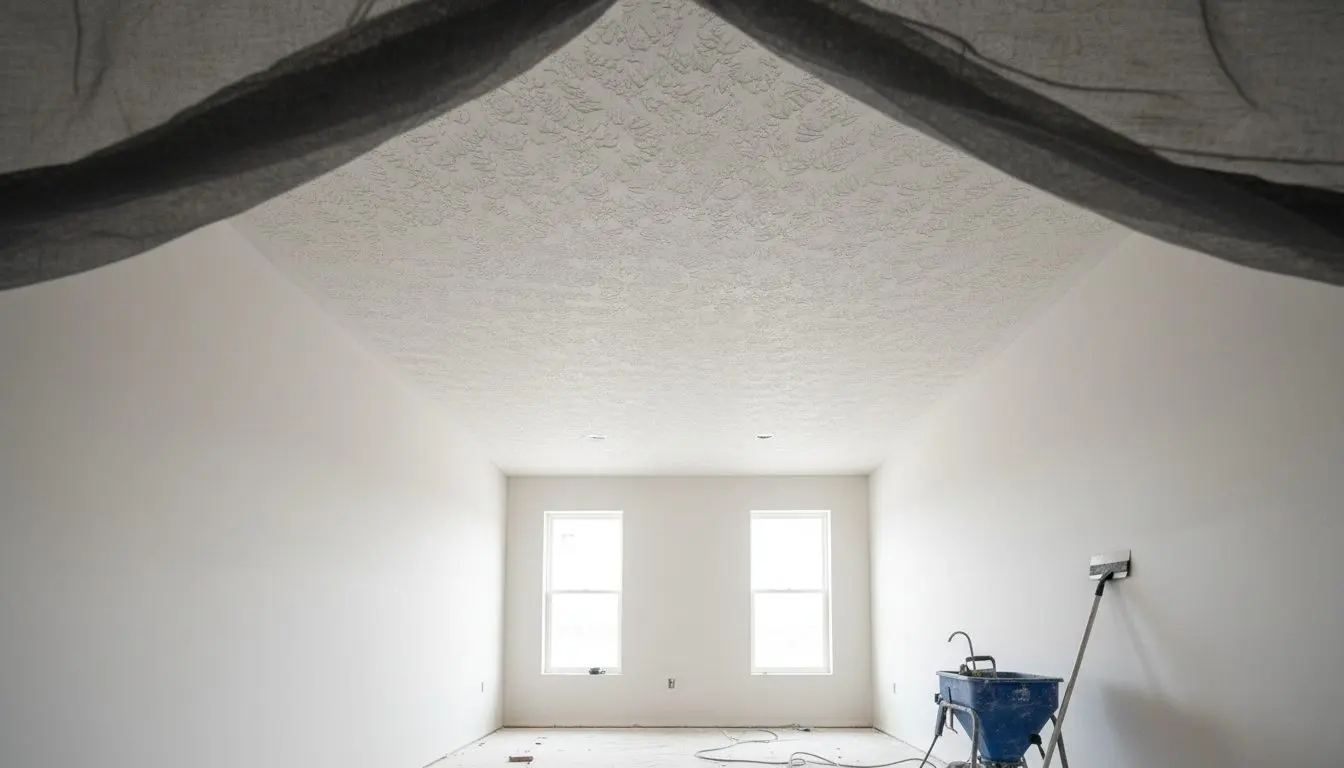
Texture and Finishing in Fargo
Texture and Finishing across Fargo and Moorhead
Mixed to a measured consistency, tested on a sample board against your wall, and knifed inside the set window rather than whenever the gun is empty.
One pattern from wall to wall, and no patch showing
You end up with a surface that carries one pattern from wall to wall, with no seam or patch reading through it.
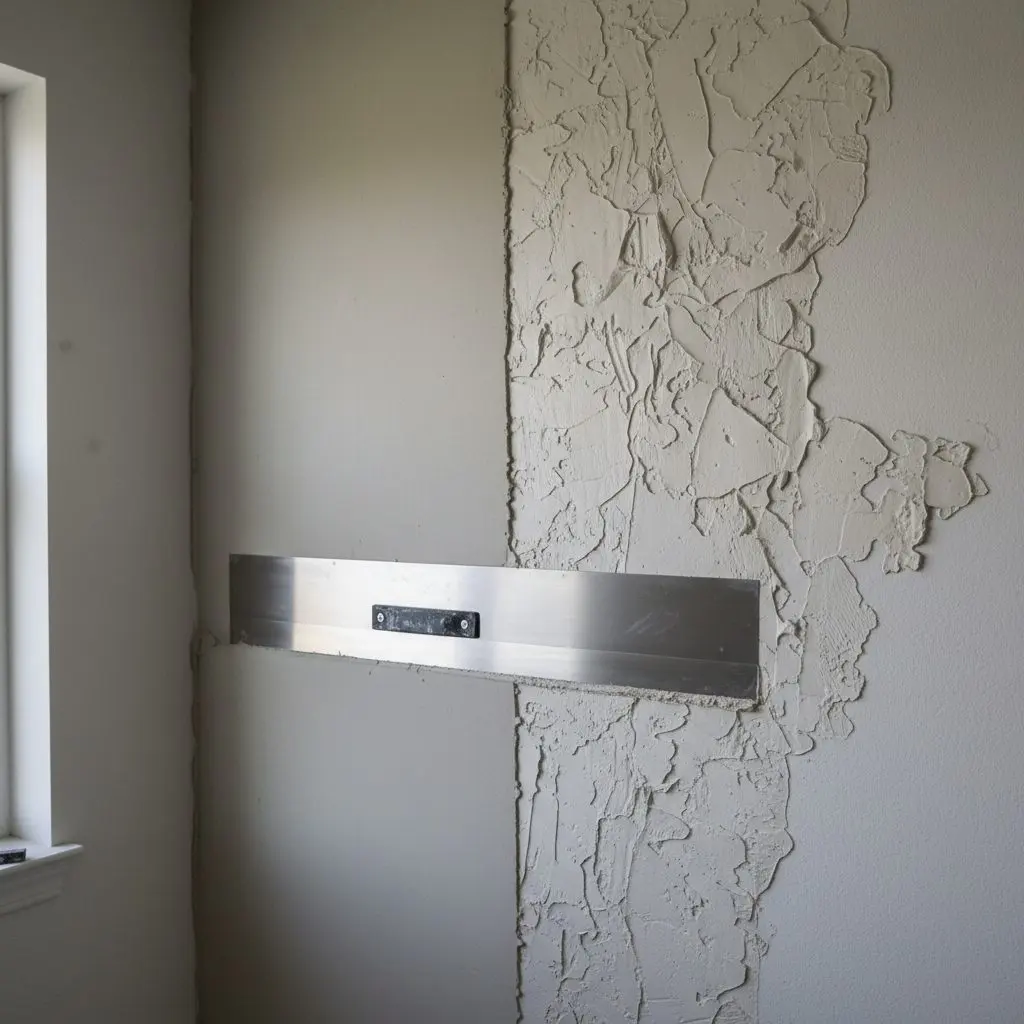
This is the finishing coat and the pattern on top of it. Level 5 skims, orange peel, knockdown, skip trowel, popcorn removal and matching an existing texture into new work. It assumes the board is up and taped. If the framing is still open, start at drywall installation. If a hole has to be cut and backed first, that part is drywall repair.
Around fifty texture jobs a year, and the ones that take the longest are matches into houses in Hawthorne and Madison built well before 1970.
Matching an existing texture into new or repaired work is the most common call, then Level 5 skims on new work, then popcorn ceilings coming off, then a whole room retextured from scratch. Every mix is made to a measured consistency and tested on a sample board held against your own wall, in your own light, before a gun is loaded. A knockdown is then knifed inside the set window rather than whenever the sprayer runs out, which is the difference between soft flattened peaks and hard crumbs.
Somebody who has just had a wall repaired and cannot live with a smooth rectangle in a textured room, and a builder wanting Level 5 on the west-facing walls of a house before the painter books in.
Call for a free look and a sample board at (701) 555-0132. You will go from pointing out the patch to everybody who comes in to nobody ever asking about it!
Orange peel, knockdown, Level 5 skims and popcorn off
The coat that decides what the room looks like, and the pattern that has to agree with the rest of the house.
- Orange peel and knockdown sprayed
- Hand knockdown and skip trowel
- Level 5 skim over a whole room
- Existing texture matched into new work
- Popcorn ceilings taken off and reskimmed
- Old heavy texture skimmed back flat
- Primed and left ready for paint
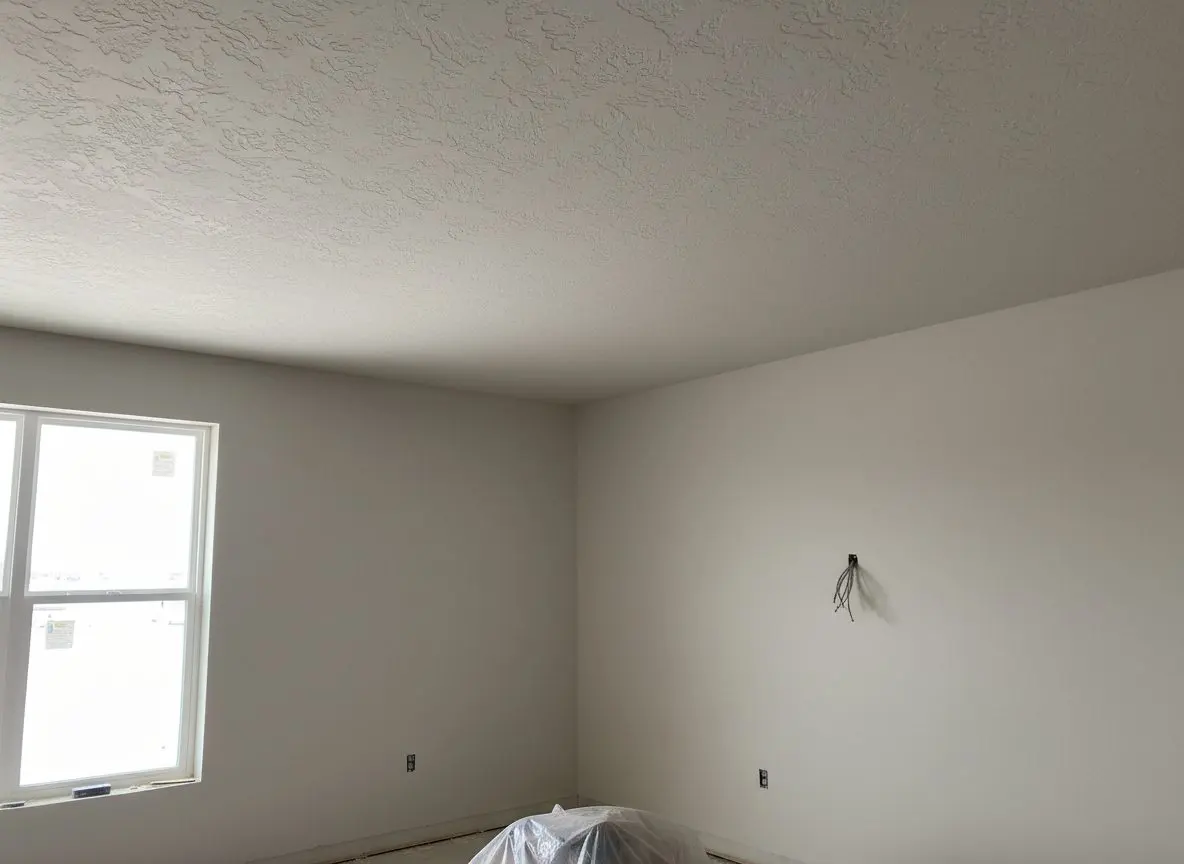
Matching the old texture, or skimming the room flat
A match is usually the cheaper answer, and on a light pattern it is also the better one.
Match when the existing pattern is even, when it is a sprayed orange peel or a light knockdown, and when the new work is a patch or one wall rather than most of the room. Those patterns are repeatable off a sample board, and matching costs a fraction of taking a whole room back to flat and starting again.
Skim the room flat when the old pattern is a heavy hand texture with a personality to it, when different walls already disagree with each other, or when you want a flat modern finish anyway. A heavy hand pattern matched into a small area is the one job that shows from the doorway however carefully it is done.
You will be told which of the two it is on the visit, after a sample board has been held against the wall, including the times a match will do and a skim would be money wasted. If the pattern can be repeated, the scope says match and prices it as one.
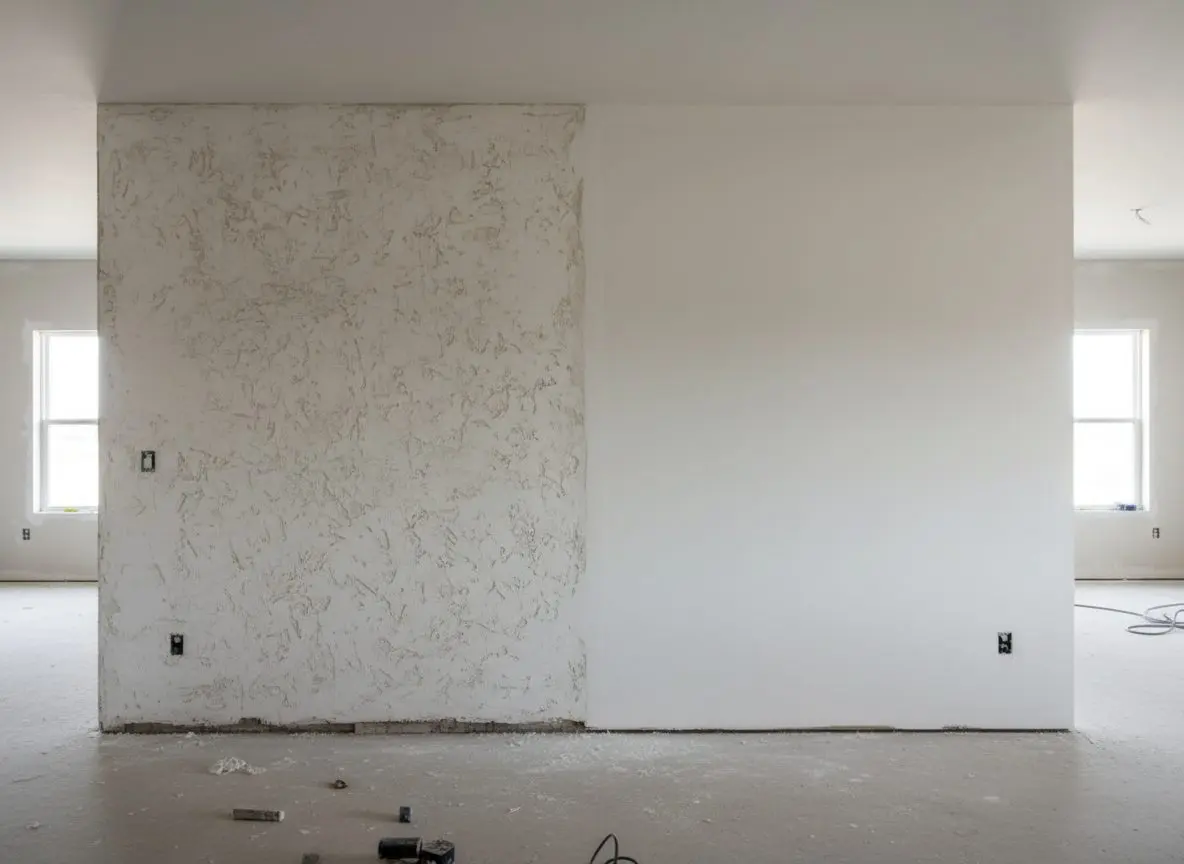
Measured by the bucket and proved on a sample board
Mixed to a measured consistency, proved on a sample board, knifed inside the set window.
Every mix is made to a measured consistency rather than by eye, because the water in the bucket decides how big the pattern comes out of the gun. It is sprayed onto a sample board and held against your wall, in your own light, before anything goes on the room.
A knockdown is knifed once the peaks have lost their shine, which in a heated house here is a far shorter window than the bag allows, so the knife follows the gun around the room.
Level 5 means a skim over the entire face and a second sanding pass, not a heavier third coat over the joints. Rooms come up to at least fifty-five degrees first and stay there until the surface is dry.
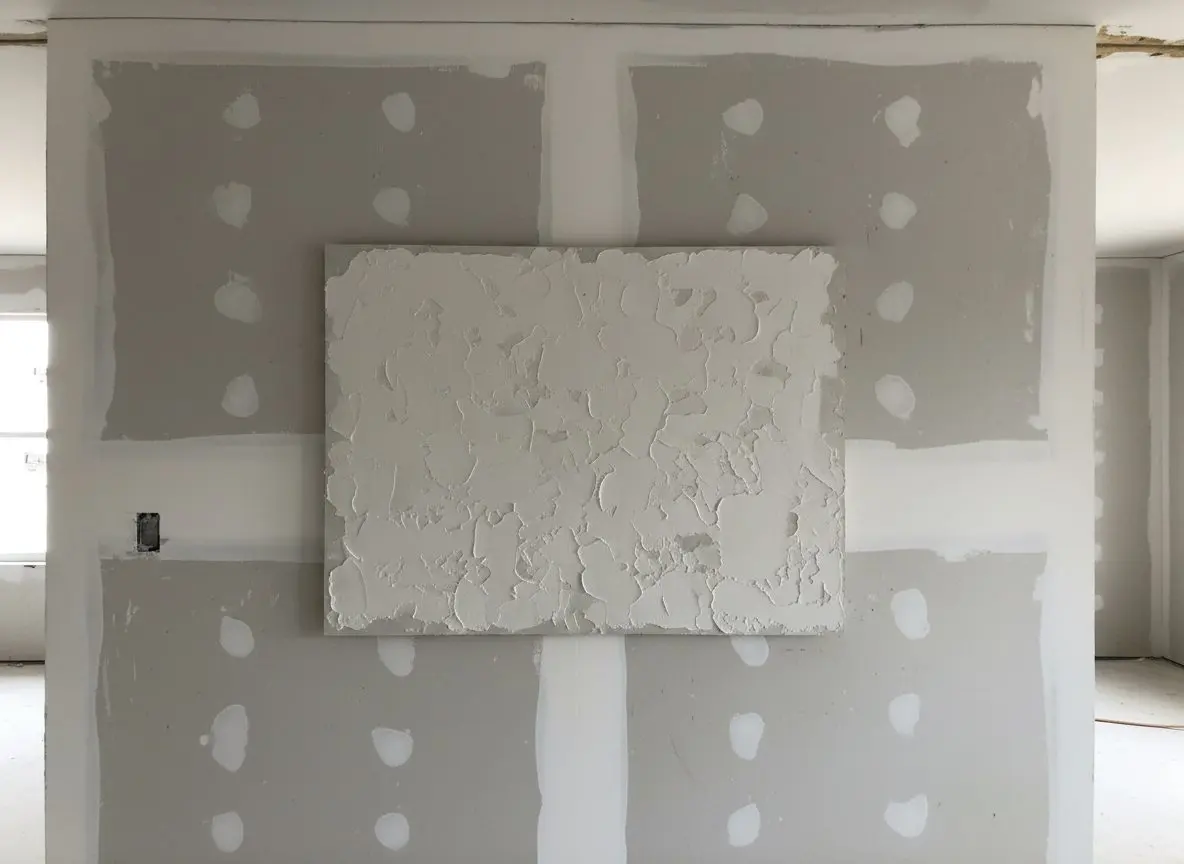
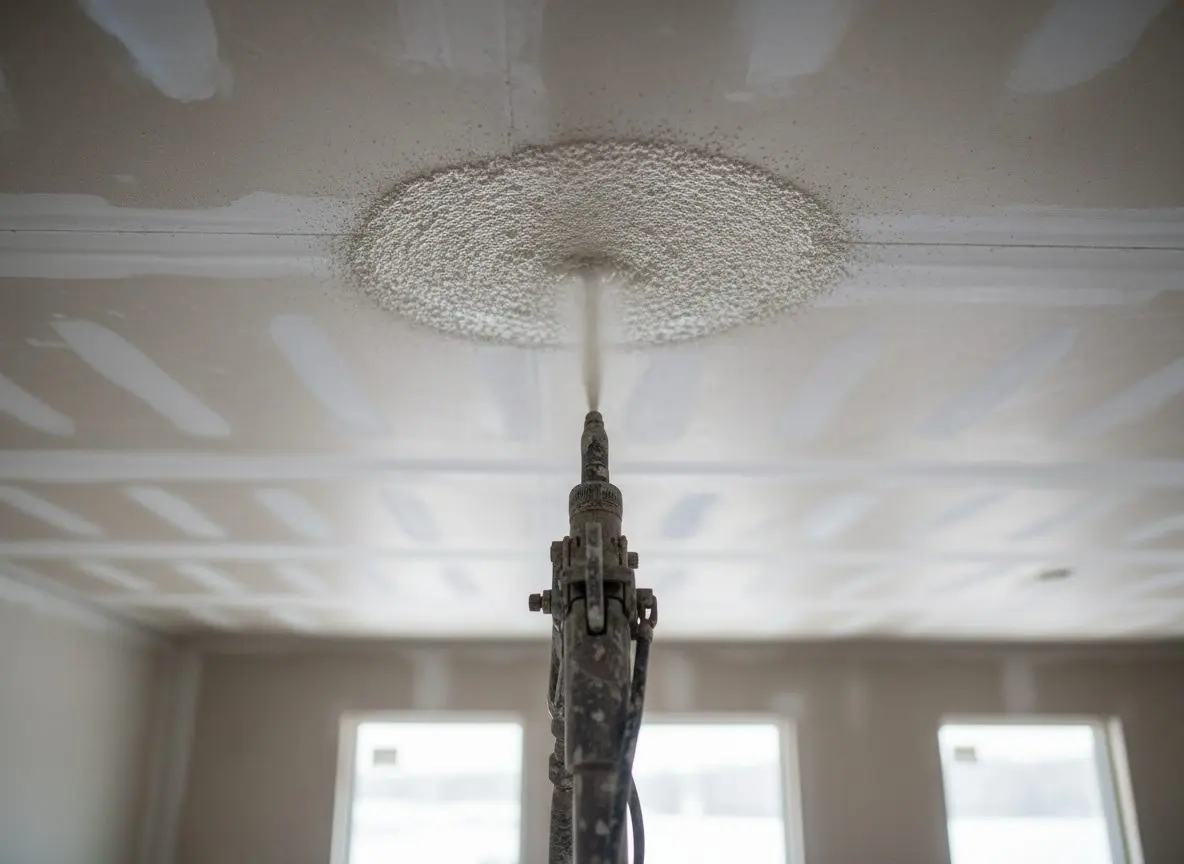
- Texture mixed to a measured consistency
- Sample board proved against your wall
- Knockdown knifed inside the set window
- Level 5 is a full-face skim, not a heavy third coat
- Room held above 55 degrees while it dries
- PVA primer before any paint goes on
Call and somebody will come out, measure the room and tell you which of these your job actually needs.
(701) 555-0132What moves the price on texture and finishing
Two ceilings the same size can be days apart. What decides it is which pattern you are matching and whether the surface underneath has to be made flat first.
- Which pattern, and how heavy
- A sprayed orange peel over a whole ceiling is quick. A hand knockdown at the same square footage is several times the labor, because every square foot passes under a knife rather than under a gun.
- Matching rather than starting fresh
- A fresh room is one mix and one pass. A match costs sample boards, drying time between attempts and the possibility of a second try, and none of that scales down with the size of the area being matched.
- Ceiling area against wall area
- Overhead work is slower, needs stiffer mud and more masking, and every pass is made against gravity. A room with textured walls and ceilings is not twice the price of the ceiling alone, it is more.
- What the surface underneath needs
- Texture over fresh Level 4 board goes straight on. Over old paint, old patches or a heavy pattern being buried, the surface has to be sealed or skimmed flat first, which is a whole extra stage.
- Masking and protection
- Spraying puts fine texture on everything not covered. Floors, trim, windows, cabinets and any room the crew walks through get masked, and in an occupied house that takes longer than the spraying does.
- Getting the room warm enough
- Texture will not set properly below about fifty-five degrees. In an unheated new construction or a garage in January that means heaters running a day beforehand and staying on afterwards, which is real time.
Which of these your room carries is settled once a sample board has been held against the wall, not over the phone. Get a free quote
From the first phone call to a swept floor
Three to seven days on site for most houses, and the dust is over inside the first two.
Call and you will get a straight answer about how many days the room is out of use, before anybody quotes on it.
Get a free quoteWhich textures still look right in ten years
Texture is the one decision in a room that everybody notices and nobody can name.
No remodeling study puts a figure on texture, because it is never priced as a line of its own. Cost vs. Value measures whole rooms and whole replacements, so any percentage return quoted on a knockdown ceiling has been made up on the spot. What is worth knowing is which of these choices ages well.
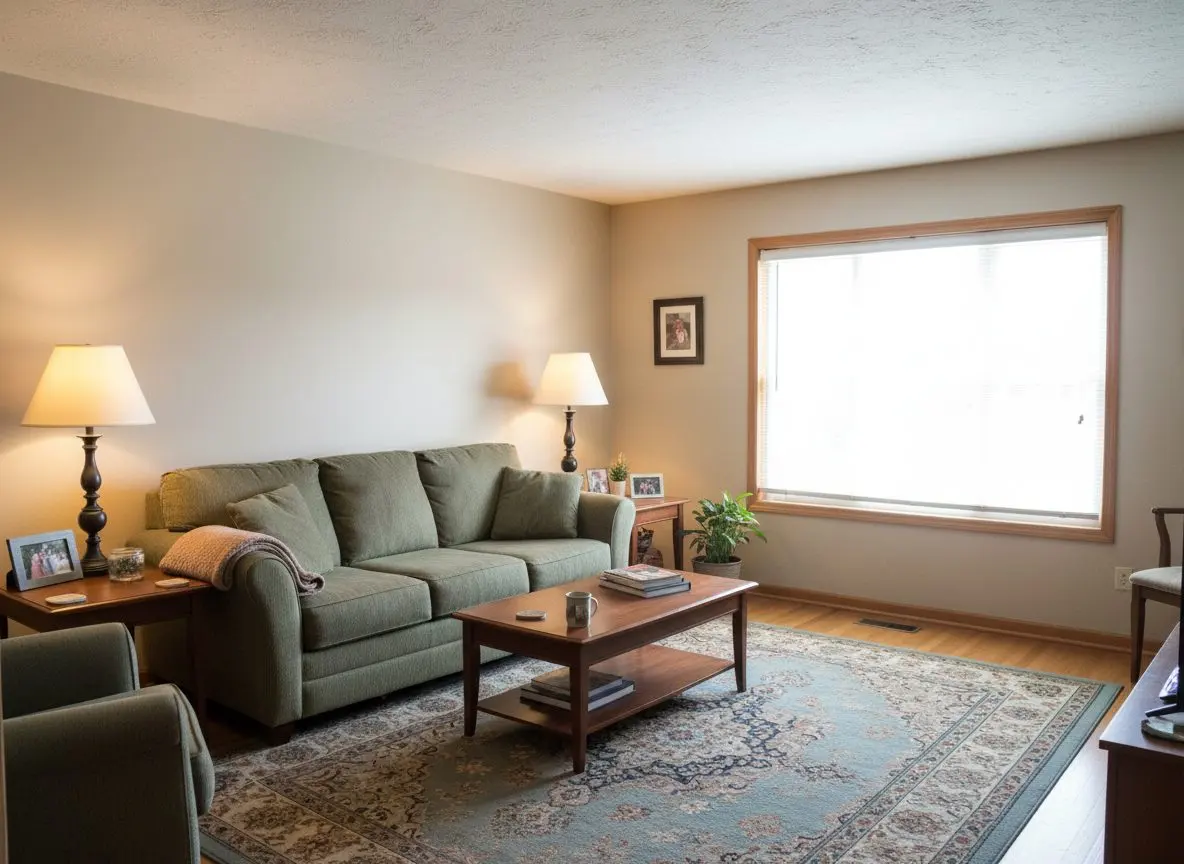
A light sprayed pattern is repairable by anybody in ten years, and a flat Level 5 wall reads as current in almost any room. A heavy hand texture is the one that dates a house, and it is also the one that makes every future repair expensive, because the next person has to match it too.
Why the knife has to follow the gun here in winter
Heating season air shortens the knockdown window to minutes, cold exterior walls dry the pattern unevenly, and anything sprayed before 1980 gets tested first.
- The knockdown window shuts fast in winter
- At the humidity a heated house here runs from November to April, sprayed texture loses its shine in a fraction of the time the bag assumes. Knife it late and you get hard crumbs, not flattened peaks, so the knife follows the gun around the room.
- Cold exterior walls dry at their own rate
- A wall with minus twenty on the other side of it pulls heat out of wet texture faster than an interior wall does. The same mix sprayed across both dries at two speeds and the pattern changes at the corner, so the room gets heated for a day first.
- Older valley ceilings are tested, not scraped
- Much of the housing in Hawthorne, Madison and Horace Mann carries sprayed ceilings from the fifties to the seventies. Anything before about 1980 is sampled and tested before a scraper goes near it, because the alternative is making dust of it.
Patterns matched in Hawthorne, Dilworth and Kindred
Six texture and finishing jobs from the last year, with the town each was in and the pattern that had to be agreed with.
-
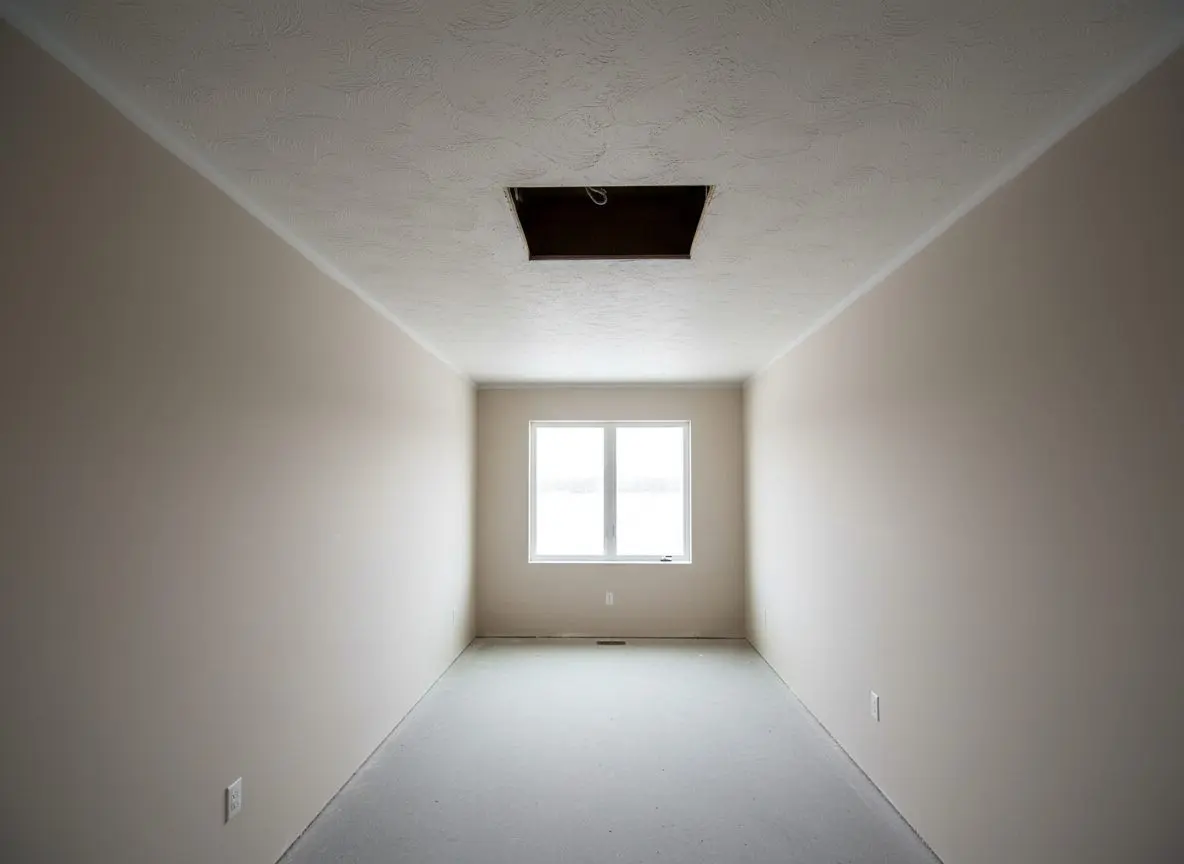
Fifties swirl matched by hand
Hawthorne
A new doorway opened in a hall ceiling. Four sample boards before the swirl matched, then knifed in by hand rather than sprayed.
-
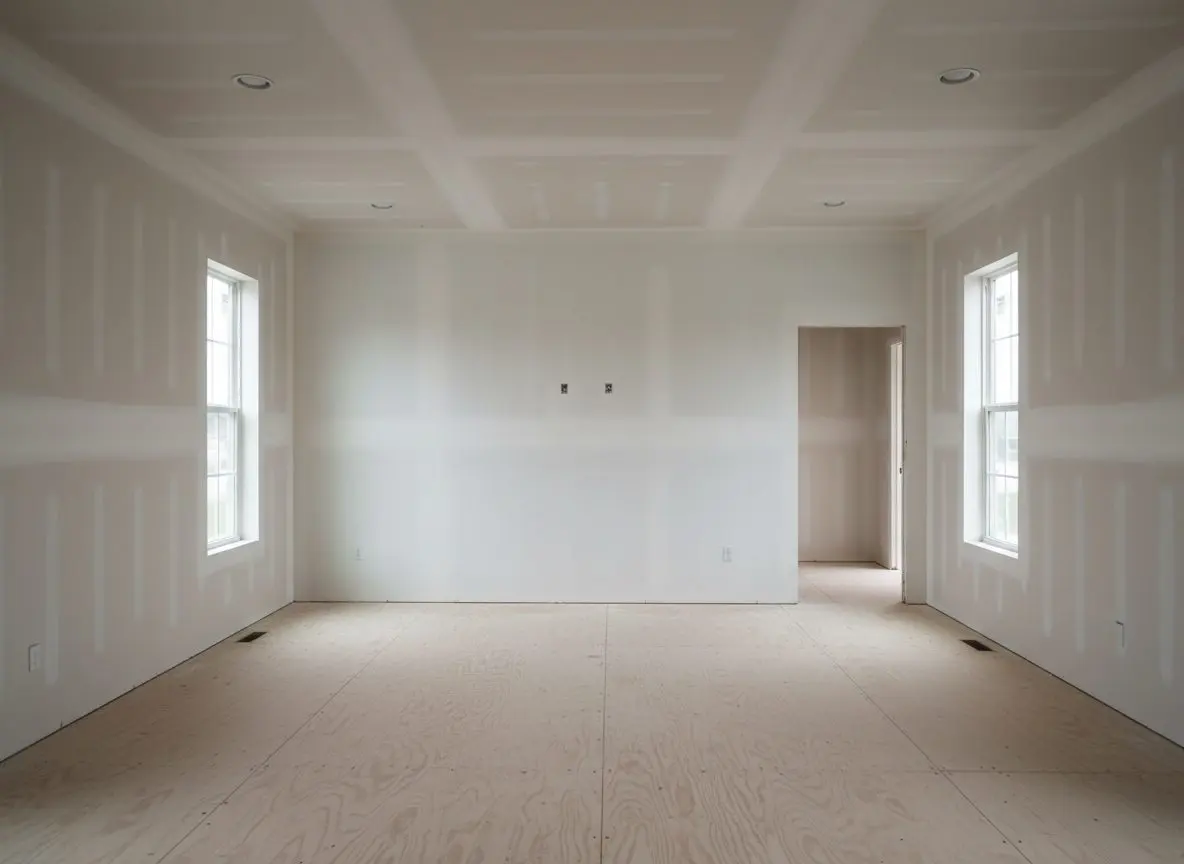
Level 5 on a west wall
Kindred
One wall of a great room taken to a full-face skim because the afternoon sun through the glass showed every joint the Level 4 walls hid.
-
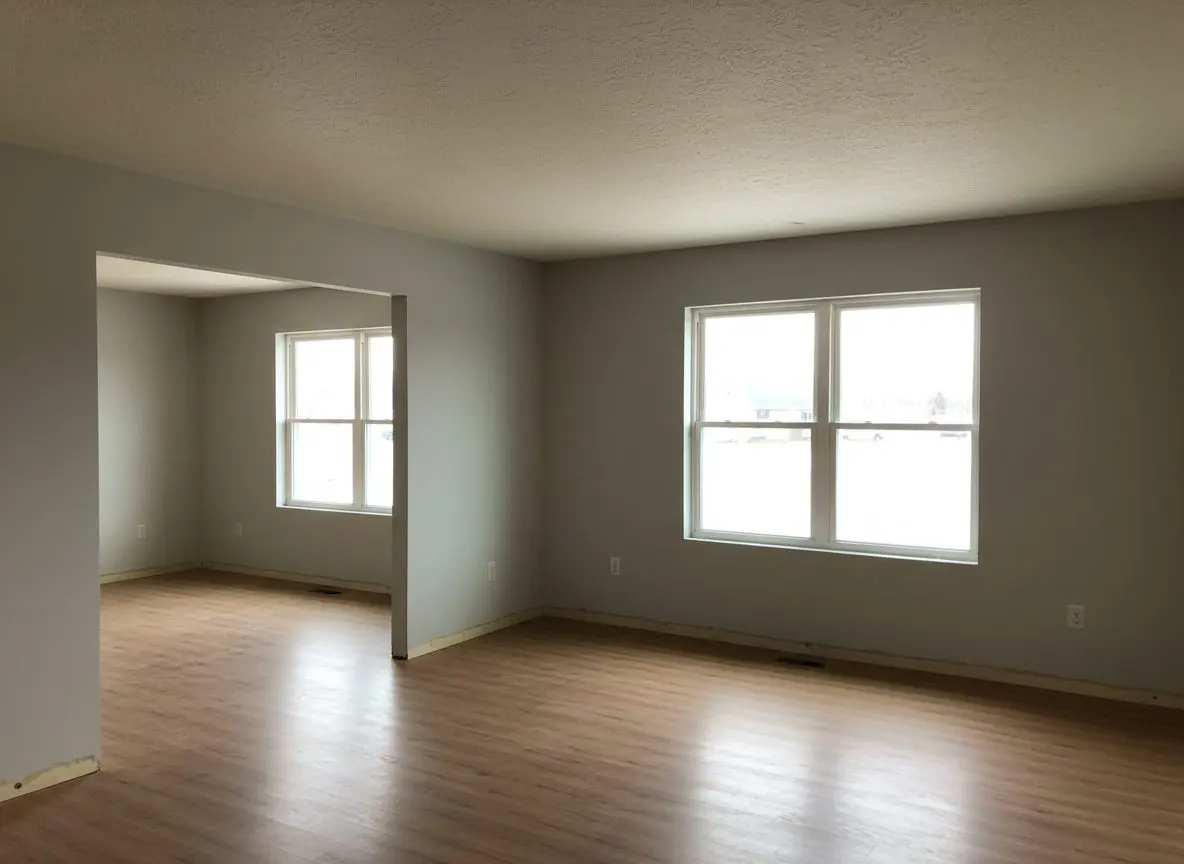
Popcorn off a whole main floor
Mapleton
Tested clear, wetted and scraped, then skimmed flat and rolled to a light stipple so the ceilings read even from room to room.
-
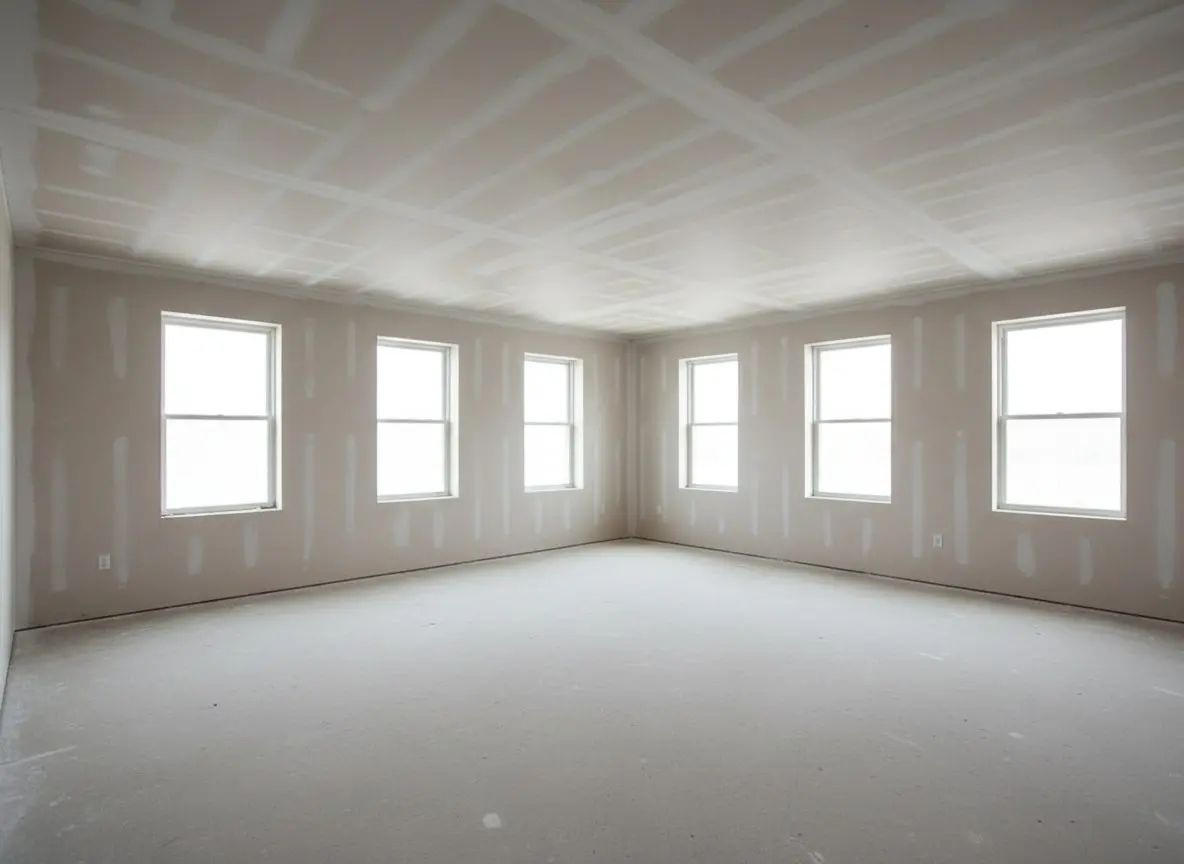
Knockdown across new construction
Horace Mann
Fourteen hundred square feet of ceiling sprayed and knifed in one day, with the knife following the gun room by room to stay inside the window.
-
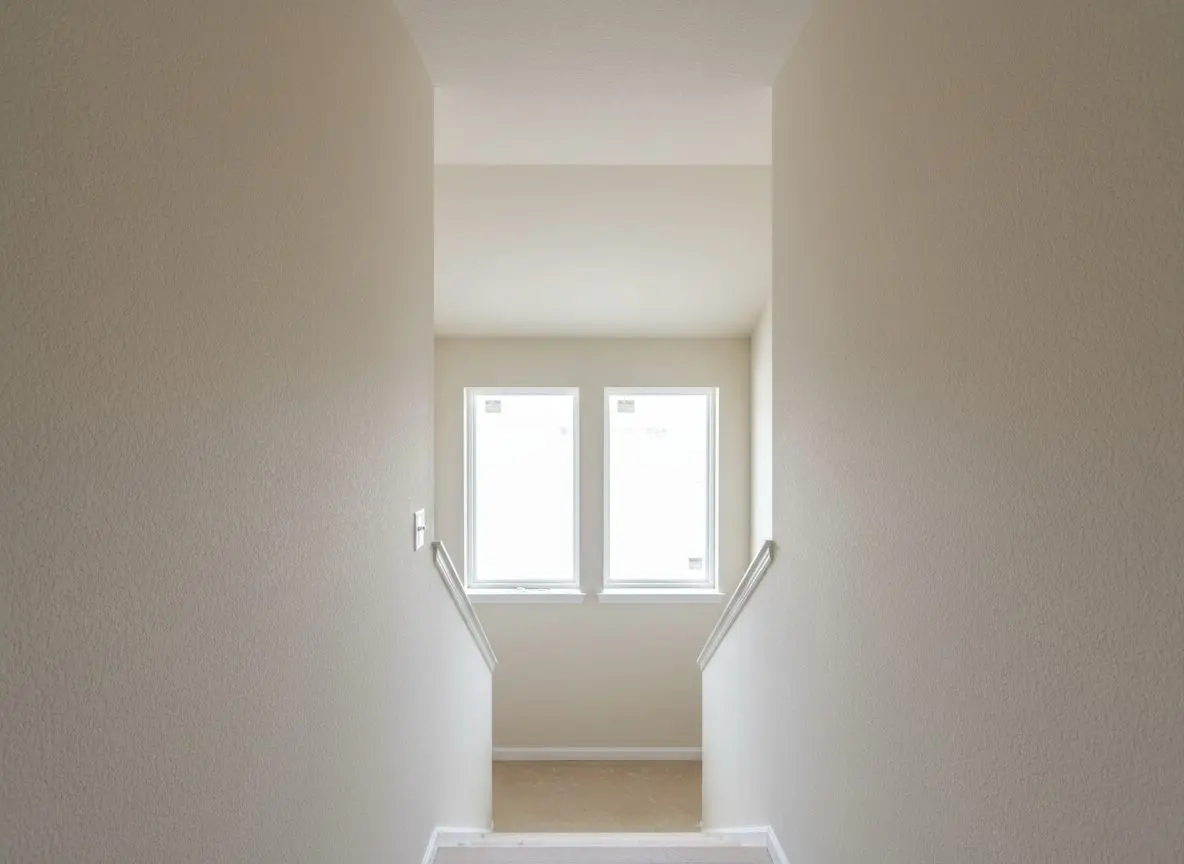
Orange peel matched into a patch
Dilworth
A single repaired area in a stairwell. The match was proved on a board first, and the paint was taken to the nearest corner afterwards.
-
Heavy texture skimmed back flat
Sabin
Three walls of skip trowel that no longer agreed with each other, skimmed out to flat over two visits and primed for an eggshell paint.
What people said after the texture went on
-
Rated 5 out of 5
A pipe froze and split behind the laundry wall in January. Wet board out the same week and the wall back the next. No fuss and no guessing.
Travis O. Kindred Water Damage Repair -
Rated 5 out of 5
Basement of a 2019 build, framed and never finished. The crew found a header sitting out half an inch and stopped to shim it rather than board over it, which added a day. Worth the day.
Marit L. Mapleton Drywall Installation -
Rated 5 out of 5
I turn a rental over most Augusts and had used a different crew every time. This one was two rooms of knocks and a hole where a TV bracket pulled out. Two days, primed, and the sheen matches.
Deb S. Barnesville Drywall Repair
All three of these started as a phone call about one wall. Tell us what yours is doing and we will come and look.
Get a free quoteFAQs
Frequently asked questions
Questions people ask before booking texture work
Can you match a texture nobody knows the name of?
Usually, and it does not matter what it is called. The mix, the nozzle and the knife timing get worked out on sample boards held against the wall until one of them disappears against it. Older hand patterns take two or three attempts, and that is priced in rather than added on afterwards.
Is textured ceiling out of fashion now?
Flat ceilings are what most new construction here specify, and light knockdown is still the most common thing we spray. The practical difference is repairs. A flat ceiling has to be finished to Level 5 and any future patch shows, while a light texture forgives a patch and can be matched by anybody.
Do you spray the walls as well as the ceiling?
Only if you want them done. The common split here is a textured ceiling over flat walls, which is cheaper and easier to repair later. If you do want textured walls, decide before the ceiling is sprayed so both come out of the same mix and the same day.
How long before texture can be painted?
A full day for a light spray in a warm room, and two for a heavy knockdown or a room that is still cold. Primer goes on once the surface is dry all the way through rather than dry to the touch, because painting over damp texture leaves a patchy sheen you cannot fix by adding a coat.
Can you texture over paint?
Yes, over a sealer. Bare paint draws water out of the compound unevenly, especially over old patches and touched-up areas, and the pattern dries with flat spots through it. A coat of primer sealer first costs a few hours and is the difference between an even room and a blotchy one.
Will texture hide a bad taping job?
It hides some of it and none of the worst of it. A heavy pattern will bury a slightly proud joint. It will not bury a butt joint standing a sixteenth off the wall, and it will not bury a wavy corner, because texture follows the plane it is sprayed onto rather than correcting it.
Does matching one patch cost more than doing the room?
Not more, but far more per square foot than people expect. The sample boards, the mixing and the drying time between attempts are the same whether the area is two feet square or twenty, so a single small match can be most of a morning. Several patches in one room is much better value.
How much masking do we have to do ourselves?
None, and it is better if you do not. We mask floors, trim, windows and any opening the overspray could reach, because texture that lands on a window frame has to be scraped rather than wiped. What helps is clearing small items and anything soft out of the room before we arrive.
Does spraying make more mess than sanding?
Different mess, and less of it in the air. Spraying throws wet material that lands where it lands, so it is a masking problem rather than a dust problem. Sanding a Level 5 skim is the dusty part of this work, and that is the stage where the vacuum sanders and the negative air machine come out.
What is the difference between orange peel and knockdown?
Both start as sprayed droplets. Orange peel is left as it lands, so the surface is a fine even stipple. Knockdown is sprayed heavier and then flattened with a wide knife once it has begun to set, which leaves broader plateaus with shadow between them. Knockdown hides more and costs more.
Do you need water and power for the sprayer?
A standard outlet and an outside tap or a kitchen sink is enough. The compressor is the loudest thing on the job and it usually sits outside the room or outside the house with a hose run in. In deep winter it goes in the garage rather than the driveway so it will start.
Can texture be taken off again later?
Yes, and it is a proper job rather than a weekend. Sprayed patterns are wetted and scraped, then skimmed flat, sanded and primed, which is two or three visits. Anything applied before about 1980 gets tested first, because scraping is exactly the wrong way to find out what is in it.
Fargo Drywall Elite
The book runs three to four weeks out, and a leaking ceiling jumps to the front of it.
Fargo Drywall Elite hangs, tapes, finishes and textures board across Fargo and the Red River Valley towns around it, in houses, additions and commercial units alike. Three crews finish around a hundred and eighty jobs a year, working through winters most trades slow down for. Trading here since 2009.
Why a crew that knows a Fargo winter makes the difference
- Seventeen years hanging board through Red River Valley winters, since 2009
- A measure on site before anything is priced, never a number guessed over the phone
- The scope is written down so you can hold it against the other two quotes
- Compound sets fast in dry winter air, and the coats are timed for it
- Every surface is primed before we leave, so your painter is not the one who finds a defect
If a ceiling is staining after the melt, a wall needs drywall from scratch, or a room just needs finishing off, call (701) 555-0132 and somebody will come out and measure it. You get the scope in writing before any board is cut, and the schedule accounts for the drying time a Fargo winter actually needs.
Give us a call
Send us a message
1630 1st Ave N, Ste B, Fargo, ND, 58102
Where to find us